Uncategorized

Beware the ivy

July 15, 2025

Beware the ivy of Paraguay. Or Uruguay: it seems to answer to either name, or indeed to Clematicissus striata, if you speak clearly. The little lightweight climber was initially charming. It arrived in the garden from a neighbour’s, unseen through the ivy on the trellis. It infiltrated the Trachelospermum. It found its way to a neighbour’s Japanese maple. It was only when I noticed the light gold of the maple was turning dark green that I spotted the culprit. By this time, it was everywhere. Each time I examine the plants on the trellis (they include ivies, Trachelospermum (or shall we call it Confederate jasmine, coming from below the Mason-Dixon line?) rose and Clematis Perle d’Azur (precious and increasingly rare) a delicate little shoot of the dreaded South American ivy is there.

Shall I talk my way into the (rarely lived in) neighbour’s? Shall I call the Council’s pest officer? It’s probably just a London thing: it’s been so mild here. There hasn’t been a frost within recent memory. It tempts us to plant all sorts of tender things. But look very carefully at tempting tender treasures; give them an inch and they can take on ell.

Ell? Apparently (I looked it up) the distance from your fingertips to your elbow – but isn’t that called a cubit? In any case it’s, give or take, eighteen inches. It was good enough for Noah, building his ark, and it’s still the basic unit for traditional brown furniture. Try it: Your chest of drawers will either be three feet or four feet six or six feet wide). Not millimetres.

But don’t get me on to the folly of the metric system. Napoleon had lots of good ideas, but the metre was not one of them. Nor the litre – which is why French markets still often use the livre and even the pint. As for the millimetre, and architects specifying a garage door should be thousands of millimetres wide…  Blame the tyrant.

[rsnippet id="1" name="2nd featured image"]
No more Newt?

June 6, 2025

There were fewer show gardens at Chelsea this year. Some take it as an indication of the country’s financial health; it certainly means fewer sponsors. I believe this will be the final shout of the gloriously oofy South Africans who have created The Newt in Somerset and its stylish relatives. That would be very sad. (Their super Newt cider was welcome refreshment on the way round the show). South Africa was represented only too graphically in the Karoo Succulent garden, a grim reminder of how lucky we are to have our rainfall (measly as it has been so far this year). To call this desert a garden was stretching the term.

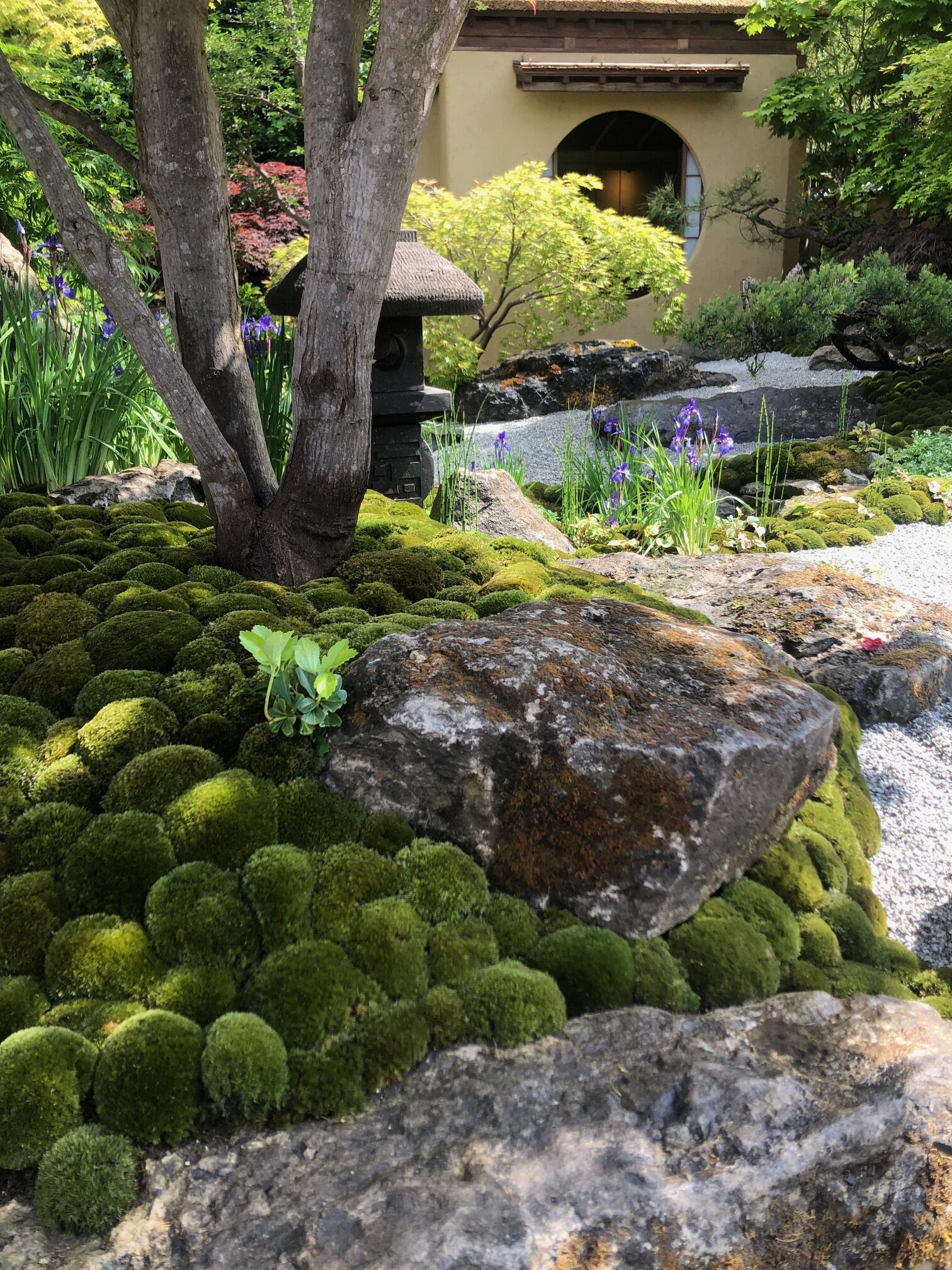
Trad’s annual prize, keenly contested as ever, goes to a complete contrast, the Japanese tea garden, cool, leafy, not over-flowery. Exceptional maples provided much of the colour (in shades I have never seen in Acer palmatum before); a modest stream falling over rocks the animation. I could imagine myself sitting with a book all day in its tranquillity. I had to be reminded that this is not precisely the point of Chelsea.

I was baffled, though, to be told that Monty Don’s very pretty, if not exceptional, garden was designed by his dog. It’s an intriguing idea, recently carried to an extreme by someone we know who, having bought a conventional London terrace house, stripped out all the floors and internal walls and hired a ballet dancer to make his way, via ropes and ladders, down to the basement, carrying with him a ball of red wool to record his exact route. The point of it escapes me, but it led to a steel circular stair being installed. A noisy thing.

In my experience dogs are unpredictable, taking the shortest route to whatever attracts their nose. Repton would scarcely have accepted this as a basis for garden design.

[rsnippet id="1" name="2nd featured image"]

Oh, to be in England

May 8, 2025

Robert Browning (who lived in Kensington for a while in the oddly austere de Vere Gardens, a street without a single tree) felt exiled in Italy. ‘Oh to be in England,’ he sighed, ‘now that April’s here. When the brushwood sheaf round the elm tree bole is in tiny leaf’. Rarely, alas, now. Those great elms have all but disappeared.

Elms apart, this April could have been his model; four weeks stolen from summer with all the adornments of spring. Few streets, it is true, are as lavishly adorned as those round us in Kensington. Wisteria reaches the eaves, cherries blizzard the pavements with petals, and the scent of wisteria, trapped between the houses, is like a warm bath. By the end of the month it is joined, and overwhelmed, by the smell of jasmine (‘smell’, because ‘scent’ is not a powerful enough word. There are moment when I’m tempted to call it a pong.). Jasmine, considered a tender treasure when I started to garden is now rampant, scrambling into the ivy on the walls, hanging in swags with its pretty little pink and white buds, reaching up to invade the Japanese maple next door – behaving, in fact, like Old Man’s Beard, the wild clematis that smothered the hedges where I was brought up on the North Downs. I caught it shinning up the ivy outside my dressing room window. ‘Down, sir’, as the zoo keeper said to the lion which was gobbling poor Jim (whose friends were very good to him).

[rsnippet id="1" name="2nd featured image"]

Blue

April 29, 2025

Maybe it’s less than an obsession, but it’s certainly more than an inclination. Blue, that is. It catches my eye. If there’s a patch of blue, that’s where I look, whether it’s the firmament or a periwinkle. Can it have some physical effect on my brain? It does on my emotions. It holds my attention – partly, perhaps, because I’m half-wondering: is that really blue?

Such a broad wave-band of colours comes close, nudges or suggests blue that I’m cautious about the word. I’m quite certain, though, about one little plant I’ve just met for the first time. Its label says Lithodora diffusa, and the web tells me that we Brits have a name for it. One I’ve never heard: Purple Gromwell.

Perhaps I’ve been steeped in gardening for so long that ‘common’ names sound foreign to me. Latin comes easier. ‘How’s your gromwell coming along this year?’ sounds more like medical sympathy than horticultural enquiry. The answer is ’very nicely’. It crowns its eight-inch pot with a one-inch layer of the truest, bluest blue: tiny star flowers being constantly buzzed by a variety of bees. I’ve just spent five minutes in their company, puzzling out whether a bee visits the same flowers twice, or whether it’s a different bee, or I’ve got the wrong flower.

It’s a good time of year for blue and insects of all sorts are working hard. Forget-me-not and something else boragey but darker blue have sprung up from nowhere. So have bluebells. Violets (borderline blue, it’s true) creep out of the box hedge.  Dare I mention it’s still thriving? Pansies (supposedly ‘winter’) are celebrating the sunshine, anemones will be along soon …..

If only our hydrangeas would play ball.

[rsnippet id="1" name="2nd featured image"]

npk please

February 6, 2025

It’s been one smooth sweet flow from a winter more marked by darkness then cold into the most be-flowered spring I can remember. I can only speak for the mild south-east, but there was only a moderate snap of cold in early December, then the bonus of warmth last summer ripening wood and preparing flower buds for the show we are now enjoying. The cherry (double-flower gean) in the street is stretching its rather gawky branches clotted with snowballs almost to my study window (top floor front). The magnolia below is just finishing its performance (purple petals, white on the back; I wish it were all white). Most prized of all, the cercidiphyllum in the front, a great drooping salad of a tree, has stretched far over the pavement to reach the parked cars. We’ve cut a tunnel for the pavement, but people still have to bow their heads as they pass.

The garden behind has now turned green; not yet flowering. All it can propose at present is white viburnum, camellias (pink “Top Hat’ and white ‘Simplex’), the brave little effort of the pink ‘monthly’ rose and a purple wallflower (Erysimum to the educated). But the clematis have begun to clamber, white bergenia looks fresh from the laundry and shoots from the ground are awaiting identification. I’ve never seen a variegated lavender before, but this newcomer in its pot on the wall catches the light and our approving regard. Hydrangeas in their pots pose questions: of their multiple pairs of burgeoning shoots to I prune higher or lower, for smaller or bigger flowers. They and everything else are asking for npk.

[rsnippet id="1" name="2nd featured image"]

Hugh’s Gardening Books

Trees

Trees was first published in 1973 as The International Book of Trees, two years after The World Atlas of Wine….

Hugh’s Wine Books

The Story of Wine – From Noah to Now

A completely new edition published by the Academie du Vin Library: When first published in 1989 The Story of Wine won every…

Friends of Trad

The Garden Museum